The body, mind, financial markets, education and healthcare. These are all examples of systems that nobody truly understands. The networks cannot be mapped and the cause and effect cannot be attributed. Every attempt is a simplification which, while still valuable, is insufficient.
These systems are ‘reflective’. Being a participant in the system means you have an influence over it, and that participation leads the system to be even more unpredictable.
According to Giddens, the more aware we become of our participation the more unpredictable the system becomes. More participation, who also anticipate the participation of others, and more actors, the more unpredictable still.
Markets can rise on bad news if more participants decide that the news was already baked into the price, that the news could have been much worse, or they bet on others selling (who don’t).
We know people like to copycat what other people do. To Girard, according to his theory on memetic desire, “man is the creature who does not know what to desire, and he turns to others in order to make up his mind. We desire what others desire because we imitate their desires.” When a particular sentiment takes hold, just like with an epidemic, these sentiments carry momentum for a while, until they fade.
Then there’s also the matter of perception. There is the ‘it was there all along’. History is documented by notable events: wars, financial crisis, cultural movements. These are often the final expression of something a long time coming. The signs were there in retrospect. But from our collective vantage point at the time we don’t see them. Some might predict them – they will end up being called geniuses – but then there’s always someone predicting the next crisis if you go looking for them.
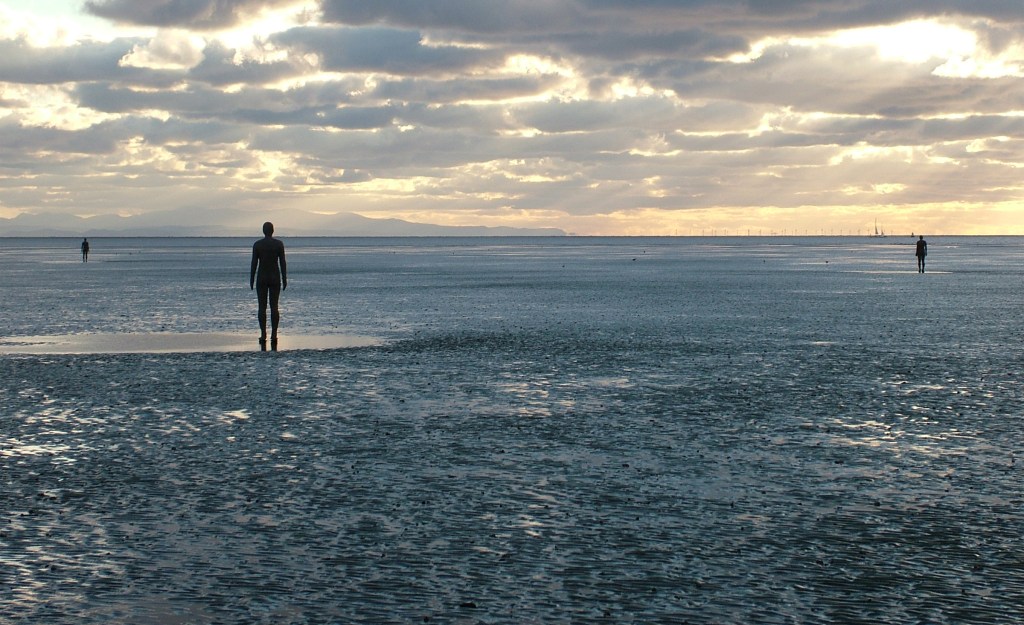
As Buffett, the preeminent investor and Oracle of Omaha, says: you only know who is naked once the tide has gone out. In other words, the nakedness was there, but just not visible until the sea changed. Crisis occurs in the face of the unknown. Where there is change that is sudden and surprising.
These complex systems are unlike closed systems, like a car engines. If my car breaks down a mechanic can examine the car to determine the fault. They might do this working backwards from the expression of the fault, in this case smoke rising from the engine, to determine the probable cause. There may then be some trial and error by changing one part at a time until the problem is solved.
This is a hard thing to accept psychologically when we have a predisposition, and are often paid, to be masters of our environment. So we often either believe we understand or believe there is a path to understanding. It’s hard to think of a circumstance where being more knowledgeable is a bad thing, but it’s a leap of faith to think that knowledge will mean you can predict with any certainty whether tomorrow’s price for Brent Crude will be higher or lower than today’s or all the knock-on effects of a major surgery.
It’s in this mega uncertainty that the balance between orientation and action is key. It is important to observe the waters and read the current, but getting somewhere requires action and that means not letting the perfect be the enemy of the good. Action is the world of the creator and much of what is beautiful in this world is thanks to the inspired creator.
 Laurence.blog